What a Weak LinkedIn Profile Can Cost You (Our Founder's Self-Audit)
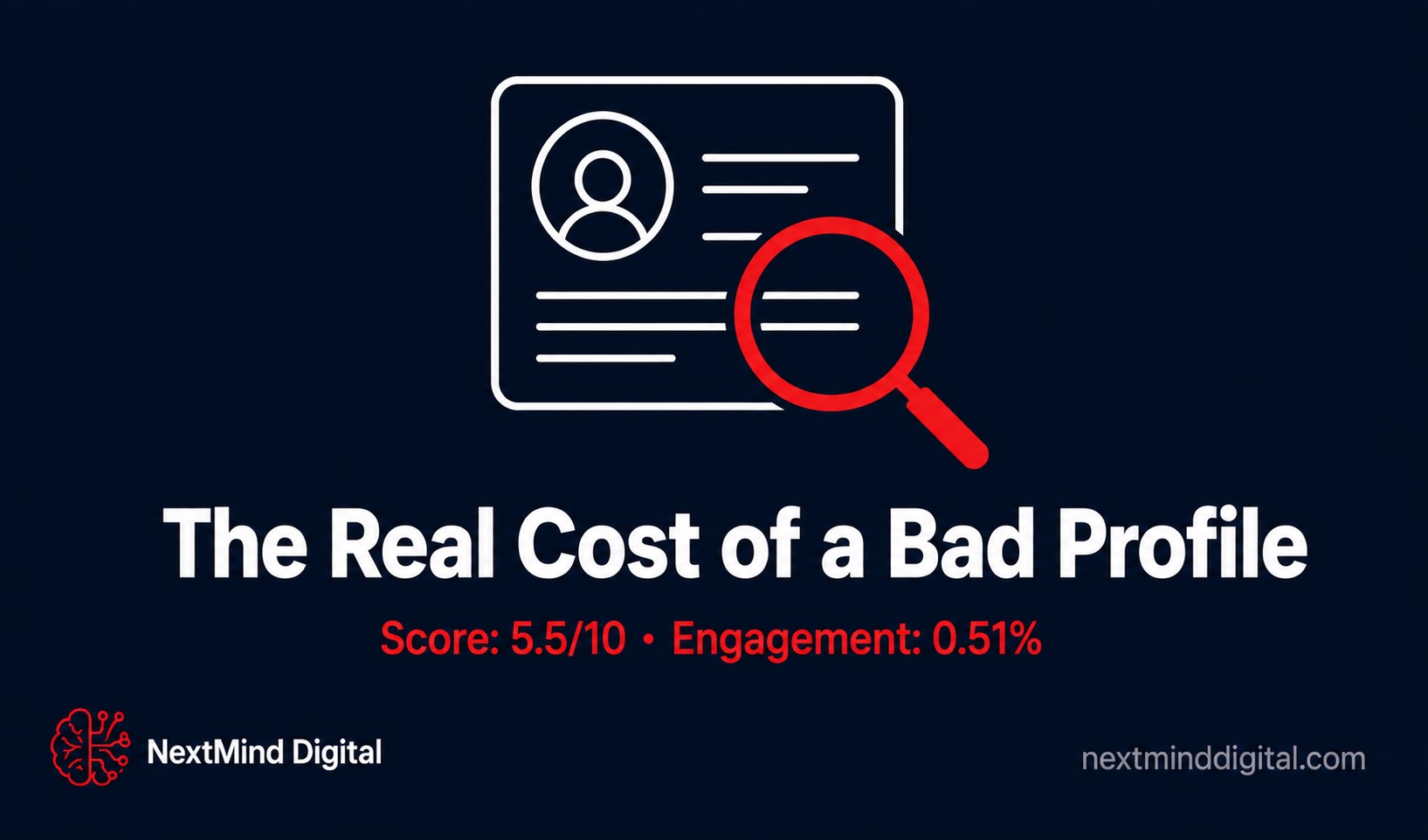
Before launching our Social Media Intelligence Report, we ran the audit on our own founder's profile first. The results were uncomfortable, and exactly the point.
Start with Your Own Baseline
Record the criteria used for any profile score before interpreting it.
Calculate engagement with a clearly stated denominator and time period.
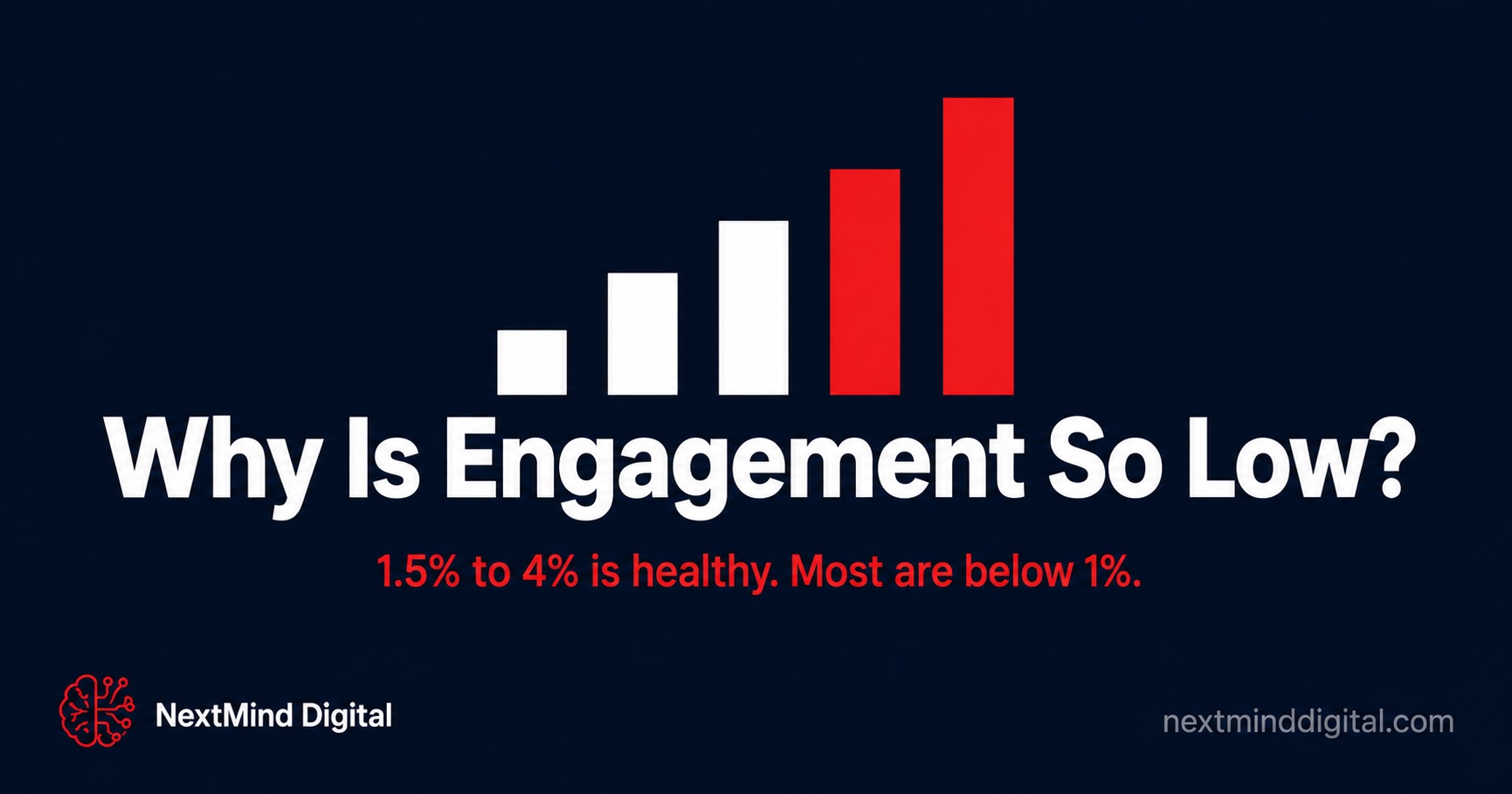
Compare similar posts and audiences rather than assuming a universal healthy range.
This was not an inactive account. It was someone posting regularly, with a verified badge, real industry experience, and a genuine value proposition. The profile was simply structured in a way that quietly worked against all of that.
What Was Actually Wrong
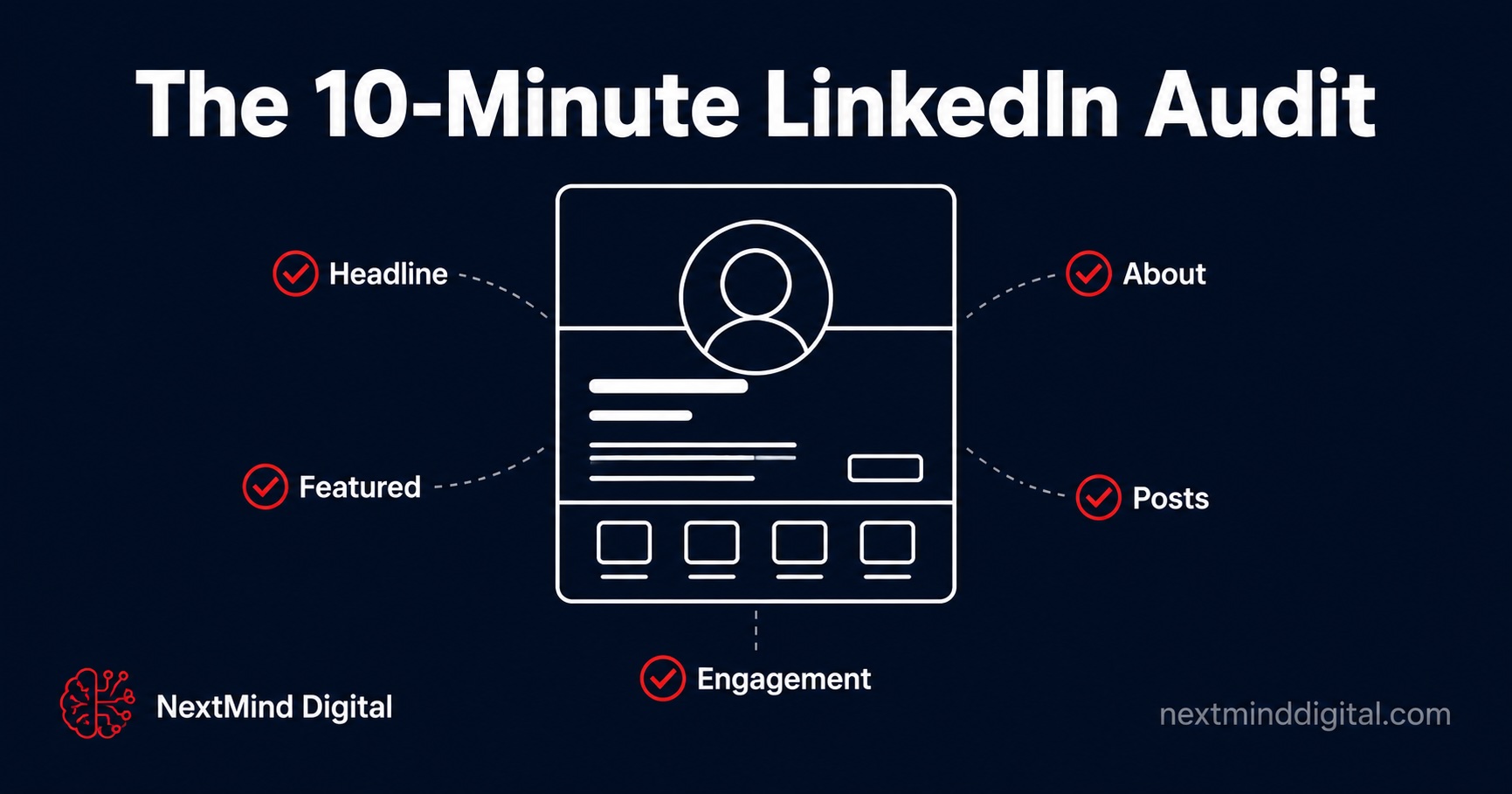
The Open to Work badge was active. For someone positioning themselves as a premium service provider, this single signal communicates the opposite of authority. It tells visitors "I need clients" instead of "clients come to me."
The headline listed 5 separate titles separated by pipes, giving no clear answer to what this person actually does for a potential client.
The Featured section contained 2 posts that were several months old, with no lead magnet, no booking link, and no clear next step for an interested visitor.
Why This Matters More Than People Think
A visitor evaluating whether to work with someone forms an impression within seconds, often before reading a single post. If the structural signals are off, even strong content underneath gets unconsciously discounted.
This is the part that is genuinely costly. It is not that the content was bad, it is that the framing around the content was undermining it.
What Changed After Fixing the Structural Issues
Removing the Open to Work badge, rewriting the headline around a single clear positioning statement, and rebuilding the Featured section into an actual conversion path are changes that take under an hour combined, yet meaningfully shift how every future visitor reads the profile.
The Takeaway
Most LinkedIn problems are not content problems. They are structural problems hiding underneath decent content. The fix is rarely "post more" or "be funnier." It is usually "fix the 4 or 5 specific things quietly working against you."
"Most LinkedIn problems are not content problems. They are structural problems hiding underneath decent content."
Find Out What's Quietly Working Against You
Our paid Social Media Intelligence Report applies the same audit to your profile.
Get Your Report